The chief executive of the Association of Advertisers in Ireland (AAI) Barry Dooley will again return as chair of Marketer of the Year.
Dooley has been CEO at the AAI since 2013.
He has extensive advertising experience working in agencies such as Irish International (now TBWA\Dublin), Wilson Hartnell (now Ogilvy) and Saatchi & Saatchi.
Since 1993, Marketer of the Year™ has recognised and honoured standards of excellence in Irish marketing, specifically for work done in the last two years.
The person is someone who, using strategy, innovation, communications and impact on the target market, has been responsible for making their brand, product or service an outstanding success.
Previous winners include Caroline Donnellan, Sky Ireland (2023); John Concannon, Fáilte Ireland (2010); John Keogh, Bulmers (2001); Emma Kiernan, Dublin Zoo (2019); Niall O’Grady, Permanent TSB (2007); and Kevin Donnelly, Britvic Ireland (2012). In 2018, Fiona Dawson of Mars was named Ultimate MotY to mark the award’s 25 years.
Details on how to enter MotY 206 and on this year’s panel of judges will be shared soon
The closing date for submissions this year is Thursday, September 24th 2026.
Marketer of the Year™ is a Marketing.ie initiative partnered by dmg Media.
A new report finds the ad industry has over-optimised for short term performance at the expense of building brand, authors Eva Zawol and Kelsey Tyson tell Inside Marketing’s Dave Winterlich
If you’ve instinctively felt that attention doesn’t just drive clicks and short-term uplift, it builds long-term brand equity and sales growth, congratulations: you were right.
A new report from Dentsu, in partnership with data giant Kantar and attention expert Lumen, has, for the first time, quantified how next-gen video platforms deliver real business outcomes.
Using a new framework for growth in the algorithmic era, plus one of the industry’s largest video effectiveness data sets – 40,000 respondents from the US and UK – The Brand Reset brings into focus how digital video drives multiyear brand growth.
It not only shines a spotlight on how voluntary attention outperforms forced exposure, but looks at the evolving role of connected TV versus linear TV, and figures out how to best balance brand and performance to unlock growth.
“The biggest thing we wanted to address with the [report] is the imbalance of investment between brand and performance advertising,” says Eva Zawol, Dentsu’s global partnership director, based in London.
“We’ve been living in this performance marketing era for around 10 to 15 years, and over this time, brands have started to invest more in performance marketing, to the detriment of brand, taking budgets out of brand and fuelling bottom funnel activities.”
Eva Zawol, Dentsu’s global partnership director, based in London
It’s why all the money has gone to search and feed activity, clicks and conversions, “everything that stands for short-termism,” she says. “We got a little bit lost because if we continuously invest in short-termism, we’re not fuelling brand, and the power of brand is that it fuels the entire ecosystem and impacts the bottom line. So what we really wanted to do is reset brands into revisiting that investment imbalance.”
The best way to do that was to focus on video. “The majority of clients, when they think of investing in brand they think video because it continues to sit at the heart of effectiveness. We needed to figure out the best methodology for testing these video assets,” she says. “So we brought together two big powerhouses, Lumen for attention and eye tracking measurement, and Kantar, which has decades of experience in brand tracking and combining those brand equity measures – brand power with financial performance.”
The pair then looked across the modern video ecosystem, not just traditional linear TV.
“Linear was included as the benchmark because historically it has been the gold standard for brand building,” says Kelsey Tyson, vice president global partnerships at Dentsu, based in the US city of Atlanta. “But we also looked at connected TV, streaming environments, social video, short-form video and broader video sharing platforms. And within those environments, we tested both skippable and non-skippable formats.”
The aim was to look at different types of ad experiences, where people either have to watch, or where creative advertising has to earn their attention.
“The last bit that we hit on, which I think is super important, is that it was brand building creative only, so no promotional, no ‘buy now’, no call to action. These were assets designed to really build memory and emotion and long-term impact,” says Tyson.
The key was to help clients break free from the advertising doom loop. It’s where brands overcorrect too far towards short term performance marketing and invest only in activities that capture demand through clicks and conversions. They then stop investing enough in the work that actually creates demand in the first place.
With skippable formats, when someone chooses to stay, the attention is more intentional and, second by second, can actually work harder
— Kelsey Tyson, vice president global partnerships at Dentsu
It’s a downward spiral that causes brand equity to weaken over time, not least because people become less familiar with your brand, less emotionally connected to it and ultimately less likely to choose it. The irony is that this makes performance marketing harder and more expensive in the end. “Because you’re trying to convert people who don’t already have a strong reason to care about or know your brand,” says Tyson.
The problem is that while performance marketing may look really efficient in the short term, “the brand demand weakens and performance just gets more expensive and then brands double down even harder on those short-term tactics. What The Brand Reset is trying to do is break that cycle,” she says. “It’s not about walking away from performance. It’s about rebuilding the brand equity that makes performance work harder.”
Part of the challenge is that algorithms are serving us all increasingly personalised and automated advertising experiences. “But measurement hasn’t fully kept up,” she says. “While the ecosystem has evolved really quickly, planning and measurement is still catching up and that’s the gap we’re trying to fill with The Brand Reset: moving the conversation beyond whether an ad was just served or viewable, but if someone paid attention, whether that shifted brand equity, and what that means from a sales impact perspective, not just for the short term, but for the long term as well,” she says.
Kelsey Tyson, vice president global partnerships at Dentsu
While linear TV is well studied, digital environments have not been sufficiently researched for their brand building capabilities.
“What we found is that, yes, we can build brands with all types of video formats, on big screens, on small screens, with skippable and non-skippable ads. It’s just that every format, depending on the platform, will deliver different results. The name of the game is to understand what they deliver, which objectives they deliver the best on, and to pull all these different levers in our planning system, to then design and craft the most optimal media plan,” says Zawol.
Among the findings was the fact that, while we instinctively feel skippable advertising is weaker, in fact, when people do choose to watch something, that attention can be really valuable.
“Forced attention and voluntary attention are not the same thing. Non skip formats give you that guaranteed exposure, but doesn’t always mean someone is fully visually engaged,” says Tyson. “With skippable formats, when someone chooses to stay, the attention is more intentional and, second by second, can actually work harder.”
It’s why good creative remains key. “Being able to keep the audience and getting them past those first two seconds is critical,” she says.
The report also identified the power of audio too. “Even when people weren’t looking at the screen, when we weren’t capturing their visual attention, they were still listening,” says Zawol.
The streaming giant is rolling out the lower-cost option in several new countries, after already launching it in the UK and the US.
In the UK, the cheapest plan with adverts costs £5.99 (€6.87), while the next ad-free tier costs £12.99 (€14.90). Netflix has yet to confirm pricing for the ad-supported tier in Ireland.
Users who opt for a cheaper plan will typically watch around five minutes of ads per hour.
Netflix isn’t alone in making the move, as Disney+ also introduced an ad-supported tier in Ireland in March. It is €2 less than its standard ad-free subscription.
As more streaming platforms introduce cheaper plans with adverts, more viewers are being given the option to give up uninterrupted watching for a lower monthly fee.
Onic Audio reports loss of €3.58m for the year, with group directors saying economic conditions were ‘turbulent’
The company behind Dublin radio stations Q102 and FM104, plus LMFM and Cork’s 96FM, has reported a fall in advertising revenue for its last financial year.
Onic Audio, which is ultimately owned by Rupert Murdoch’s News Corporation, had net advertising revenue of €22.9m in the year ending June 29, which was down from €23.27m recorded the previous year.
The drop reflects a stagnant Irish radio advertising market in that period. The industry had reported that all Irish radio generated revenues of €79.4m in the first half of 2025, up just 2pc on the same period the year before.
The Onic group also includes Limerick’s Live 95, and the U105 station in Belfast, which recently suffered the loss of five presenters after a breakdown in contract negotiations.
Over the last two years, Onic has included Ryan Tubridy in its presenter line-up, initially through his contract with the Murdoch-owned Virgin Radio in the UK. Tubridy’s weekday show for the station was broadcast on Q102 between January 2024 and last December. He now presents a Sunday morning show across the Onic stations.
The group has reported a loss for the year ended June 2025 of €3.58m before taxation, which compares to a loss of €2.75m for the previous year.
The directors say economic conditions were “turbulent” during the year, “with the ongoing challenges of spiralling cost-of-living increases, and the changing global political environment”. In the financial report, there are references to “the impact of global macroeconomic inflationary pressures” and “the general challenging market environment”.
They say that in spite of these challenges, the company continues to generate a “strong revenue performance”.
The impact of reduced revenue on ebitda (earnings before interest, tax, depreciation and amortisation) was “compounded” by an increase in operating costs during the year.
It reported administrative expenses were €25.02m, up from €24.38m the previous year.
The directors say that the group is facing “strong competition” for advertising, but digital revenues did deliver significant growth, “and we continue to invest in this area to promote future growth”.
Last May, the company changed its registered name from Wireless Ireland to Onic, which it said was “to reflect a strategic rebrand”, and with no impact on its legal status.
“In addition, we also launched a suite of new digital services to become the largest content provider on a new DAB+ trial across Leinster, and rolled out a number of new podcast and visualised offerings to complement this,” the report says.
“We have invested heavily in visualised studios for our radio output and also a dedicated space for our Onic Original and TalkSport Ireland series.”
The group’s staff numbers increased from 235 to 238, with production staff up to 153 from 144. The wages and salaries bill came to €10.5m, up from €10.3m in 2024.
News Corporation originally bought the Wireless Group in 2016 in a £220m (€254m) deal, paying £3.15 per share.
It had previously been owned by UTV Media, which sold its TV assets and its name to ITV the previous year.
As well as the seven Irish radio stations and Virgin, the group also included the London-based TalkSport, which had many lucrative football rights.
It has since launched Times Radio, a digital channel, in conjunction with the Murdoch-owned newspapers The Times and The Sunday Times.
From Marketing (And I remember Flynner from Arrow, he was the F in DDFH&B and always at the Kinsale Festival, you’d find him drawing outside The Spaniard. Legend of Advertising).
A burst of unrivalled creative energy swept through Irish advertising from the nineteen sixties to the century’s end. Ken Flynn was one of its leading proponents. As art director, creative director and agency founder, his career started in Young Advertising and followed by way of CDP Associates, Arrow, DDFH&B, and finally Anderson Flynn.
Ken was ever-brimming with enthusiasm for the job in hand. And the next job. And the next. He consistently produced high volumes of quality creative work in press, outdoor and TV – his favourite medium. Time and again he worked with leading directors of the day such as Tiernan MacBride, John Devis, Michael McGarry, Gerry Poulson – shooting by day and editing by night back in Windmill Lane with occasional forays to Dockers for refreshment.
Glitter
Along with Nick Van Vliet, creative director at Wilson Hartnell, Ken injected new life into a somewhat moribund Institute of Creative Advertising & Design (ICAD), inviting celebrity media exponents such as Cosmopolitan editor Deirdre McSharry to add glitter and fresh thinking to the somewhat inward-looking local jury panels.
Ken was always a talented illustrator and in the latter part of his creative life he became a successful artist producing eloquent portraits and landscapes, especially featuring scenes of Achill Island life, a place he always loved. Along with his wife Trish, he found great pleasure in travelling and spending time painting in his Blackwater cottage. Her death in February of this year was his death in a way. He was shattered by her loss and went quietly into the long dark night six short weeks later, about the only quiet thing he ever did.
Loyal
Ken and I knew each other for over 50 years; we worked together at both Young’s and CDP. I fought with him sometimes, loved him always because he was loyal and added life to my life. A friend and colleague of us both described him to me as “a character and a talent; one of the most honest people I have known and worked with”.
That’s as good an epitaph as any man might want or need.
Slán agus beannacht Ken, a chara dhíl.
There will be high times in Heaven. The whirlwind has landed.
Breandán O’Broin is founder and director of Company of Words
TV advertising revenue in Ireland recorded a strong start to the year, rising 3% year-on-year in Q1 2026 to €69.5m, according to figures compiled by Guardian Management Accounting on behalf of TAM Ireland.
Accoding to the TAM Ireland figures, growth was delivered across both linear and broadcaster video on demand (BVOD).
TAM Ireland said that linear revenue increased by just over 2% year-on-year white BVOD posted standout growth of 11% year-on-year.
TAM Ireland also added that “Irish Adults viewed TV for on average 2 hours and 25 minutes every day, of which 84% was consumed live (viewed as scheduled), with 16% time shifted viewing. Broadcasters’ content continues to keep audiences connected and drive conversations nationwide, with relevance at the heart of its appeal.”
It said that TV “continues to deliver against the key pillars of trust and scale, with its proven ability to build brands through mass reach and emotional connection recognised across the industry.”
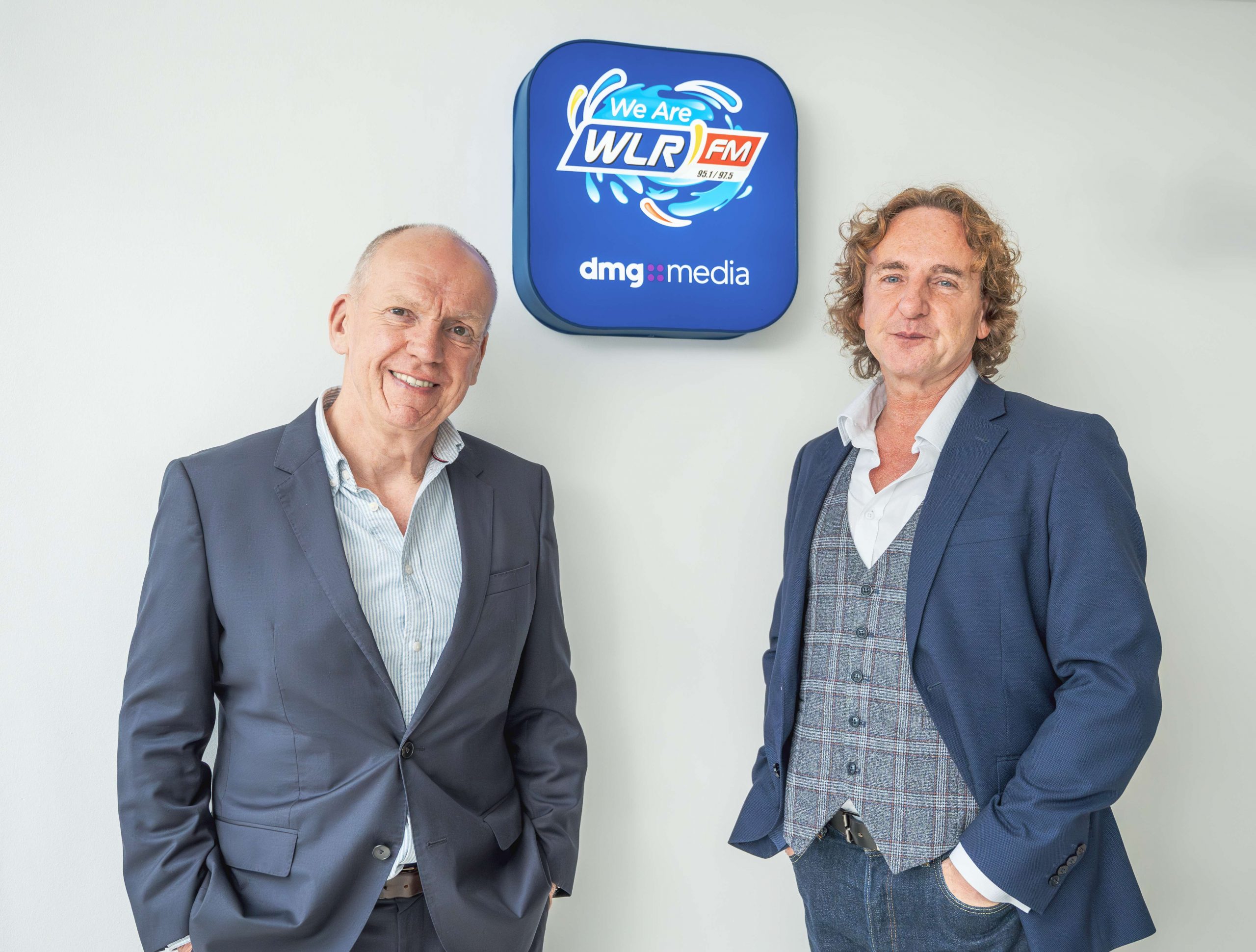
dmg media Ireland has officially acquired a majority shareholding in Waterford radio station WLR.
The acquisition sees WLR join dmg media Ireland’s expanding portfolio of media brands and further strengthens the group’s position as a multi‑platform media company, now operating across four core pillars: newspapers, consumer digital, B2B and broadcast.
The deal was first announced in December 2025 when the group said it was buying a 75% stake in WLR from the Irish Times Group. The deal has since been approved by the CCPC, which is responsible for media M&As in Ireland.
Founding director of WLR Des Whelan still retains a 25% stake in the business.
WLR (Waterford Local Radio) is the leading independent radio station serving Waterford city and count attracting 65% of all adults living in Waterford each week and 43% of all adults daily. Broadcasting across FM and digital platforms, WLR has built a loyal and highly engaged audience. It has been awarded Ireland’s Local Radio Station of the Year an unprecedented five times between 2019 and 2024.
The addition of WLR represents a strategic expansion of dmg media Ireland’s presence within the Irish media landscape and marks its first significant move into broadcasting.
Paul Henderson, CEO of dmg media Ireland, said: “We’re delighted to welcome the entire WLR team into the dmg media Ireland group. Their professionalism and broadcasting expertise will complement our existing strengths and help us deliver even more engaging content to audiences. dmg media Ireland has built some of the country’s most recognised media brands by connecting with audiences through great content. With WLR, we can now apply that same approach to broadcasting.”
“This marks a significant milestone for WLR and signals the beginning of an exciting new chapter for the station,” added Michael Byrne, CEO of WLR.
“Over the past decade, radio has evolved far beyond its traditional FM roots into a dynamic, multi‑platform audio experience, and we’ve already made strong progress on that journey. This partnership enables us to accelerate that momentum in a way that is both ambitious and sustainable. The entire WLR team is delighted to be part of dmg media Ireland and looks forward to what we can achieve together.”
The former Executive Chairman of the Gowan Group, Michael Maughan, passed away on Thursday, 26th March 2026, at the age of 88 following a short illness. He was an astute business man and a larger than life character.
Born on 19th May, 1938, he was the son of Dublin surgeon and physician, Matthew Maughan. He grew up in Dublin and was educated at Clongowes and College of Commerce in Rathmines.
Michael began his brilliant career in Domas advertising at the tender age of 19 in 1957. In 1965, at just 27 years of age, he acquired Wilson Hartnell, one of the longest established communications consultancies in Ireland (founded in 1897), growing the business exponentially.
Michael then bought Bell Advertising in 1976 to service Wilson Hartnell’s conflicting accounts, and it too blossomed to become a major force in Irish advertising.
After a number of years at the helm, Michael Maughan agreed a deal with WPP’s Martin Sorrell to sell the group to Ogilvy.
In 1977, Michael Maughan married Gemma Smith. She had been married to the late Con Smith, the Cavanman who in 1969 founded a family-run holding company what is today the Gowan Group. Con died in an air crash near Heathrow in June of 1972.
Michael joined the Gowan Group board in 1979, holding the position of Executive Chairman from 1993 until his retirement in 2020. Michael was instrumental in shaping the Group’s direction and driving its growth, leaving a lasting impact on both the business and culture.
Through his leadership and support to the management teams, the family-owned holding company strengthened its foundations and expanded its presence over the decades, today directly controlling a number of successful trading companies in Ireland across its Gowan Auto, Gowan Home and Senator Windows divisions.
Michael stepped down as a director of the family business in 2022.
A keen golfer, Michael was an early member of Milltown Golf Club. He was also a member of Fitzwilliam Lawn Tennis Club, Royal Irish Yacht Club, RIAC, Irish Georgian Society, National Gallery of Ireland, Institute of Directors in Ireland among others.
We remember Michael fondly as a larger-than-life character, with tremendous energy, a keen eye for a good deal with an avid interest in business. Charismatic, curious, and intelligent, he will be sadly missed by all who knew him.
Our thoughts and prayers are with Gemma Maughan and her daughters Fiona, Maria, Cristiana and Alba at this time of sadness.
In keeping with his wishes, Michael Maughan’s funeral was private.
For the last decade, the marketing industry has been chasing a ghost, writes Chris Cashen.
Seduced by the promise of perfect attribution and granular targeting, we’ve poured billions into a digital ecosystem that rewards short-term clicks over long-term value.
The result? A crisis of effectiveness.
Advertising has become forgettable, brands have become interchangeable, and profit growth has become a lottery.
Some have already pulled back on their digital commitments. Procter & Gamble famously cut €200m from digital ad spend after discovering that it had little impact on business outcomes.
The same is true for Uber, cutting €120m after finding it didn’t change app install levels. Quite simply, our use of digital for the biggest spenders was inefficient and measurement became a thorny issue.
So while we continually collect trinkets with little inherent value, like insatiable magpies, there comes a solution.
A new report from Effie and System1, The Creative Dividend, contains data to prove what many have instinctively known.
We’ve lost our way, and this ghost we chased was no prophet. What we do is fundamentally broken.
By analysing over 1,200 campaigns, the report dismantles the short-termist mindset and offers a new set of rules for building brands that last.
It’s a long road around to find out what’s always been true. The most successful advertising doesn’t persuade; it entertains.
The report introduces the Creativity Stack as a hierarchy of creative levers. While distinctiveness (being recognisable) and consistency (repetition) are vital, the true drivers of profit are emotion and showmanship.
Emotionally resonant and entertaining ads are more memorable and build stronger brand equity.
Dull, rational, product-led advertising is often a waste of money. In short, we need to stop selling so overtly and begin entertaining.
Media spend alone does not guarantee results. Its effectiveness is multiplied, or divided, by the quality of the creative.
The report introduces the Creative Dividend (CD), a metric that compares a campaign’s creative quality with its competitors.
A high CD means your media budget works harder, turning every euro spent into greater market impact.
A low CD means you’re effectively burning cash. The British advertising tycoon David Ogilvy said, “you cannot bore people into buying your product”, and that is as true now as when it was published in 1963.
The report’s most critical finding is a new super-metric, Excess Share of Creativity (ESOC). It’s calculated by multiplying your CD by your media spend.
This single number represents your brand’s total creative impact in the market and is the most reliable predictor of market share and profit growth.
Campaigns with the highest ESOC are seven times more likely to report profit growth than those with the lowest.
If you’re not planning to maximise ESOC, you’re not planning for growth.
If your communications aren’t likely to stimulate growth, you’re another noisy actor in an already deafening play.
The report’s Advertising Planning Matrix is a brutally honest diagnostic tool.
By plotting your creative quality against your media support, you can see where you really stand.
Some will leverage their high-quality creative with high media support to reach the promised land.
Others will remain invisible and ineffective by busily putting out low-grade creative, with low media support.
Marketers get bored with their own ideas far too quickly. The report proves that consistency — using the same brand assets, characters and emotional territory year after year — is the key to compounding returns.
It takes time for memory structures to form in consumers’ minds.
Refreshing an existing, successful idea is always more effective than starting from scratch with a new one.
We have seen many reports that outline this, not least the release of The Sustain/Ability Gain from Ad Net Zero, Havas Media and WPP Media last year, which showed, with Irish data, how impactful data can be with less.
The Guinness Christmas ad, used again last year, has been over two decades on air, and Barry’s Tea had a radio ad first broadcast in 1994 re-run on the Irish airwaves at Christmas 2025.
The best ads don’t wear out, and we can maximise their impact with high media support.
The CD isn’t just another report; it’s a manifesto for a new era of marketing effectiveness.
It’s a rejection of the flimsy metrics of the digital age and a return to the fundamental truth of our industry.
We demand that bold, emotional and consistent creativity is the only reliable engine of profitable growth.
Instead of being magpies chasing what’s noticeable, we should harness their ability to build nests.
What’s most appealing and gets noticed is what helps them deploy the safety for what they want to grow most.
Chris Cashen is Group Head of Strategy at WPP Media
A TV commercial for the ISPCC and an animated Olympics sting for Cadbury were among the big winners at the Kinsale Sharks advertising festival over the weekend.
The industry event saw a number of creatives celebrate the best of the year’s work in advertising and included commercials broadcast on television and in cinemas.
Dublin-based production company Blinder picked up the awards for best Irish single TV commercial and for best direction for their television campaign for the ISPCC.
The commercial shows a girl seen to have absorbed the abusive remarks she received, culminating in the message “children believe what they’re told”. It was produced for the agency Ogilvy Mather.
Other awards handed out in the broadcast category included a gold award in best animation for Piranha Bar for their TV stings for Cadbury during the London Olympics, which was used for the company’s RTÉ Sport sponsorship.
Post-production house Screen Scene were also celebrating in the best editor category with their commercials editor and company director Jake Walshe taking silver in the best editing category for his work on the RSA’s ‘Night Out’ advert.
TG4’s standing as an innovator in creative and branding output was also recognized with the station taking home a haul of 15 awards. The station’s creative branding output its produced and delivered in partnership with Publicis Dublin and has been a regular prizewinner at Sharks.
Among the awards it took included prizes for integrated media strategy budget lower than €100,000; best print promo for Scéalta Atha Cliath and best use of photography.
Pádhraic Ó Ciardha, deputy chief executive at TG4, said: “These Shark awards confirm that our súil eile approach pays dividends, not just in programming but in our approach to branding and marketing also.”
We use cookies to ensure that we give you the best experience on our website. If you continue to use this website we will assume that you are happy with this.